Tabletop / The review
All Flesh Must Be Eaten review: A zombie RPG with room to roam
TLDR: All Flesh Must Be Eaten Revised is a strong choice if you want to build your own zombie world. Its setting tools are the draw. Try the free starter first if you want light rules or a game you can run with little prep.
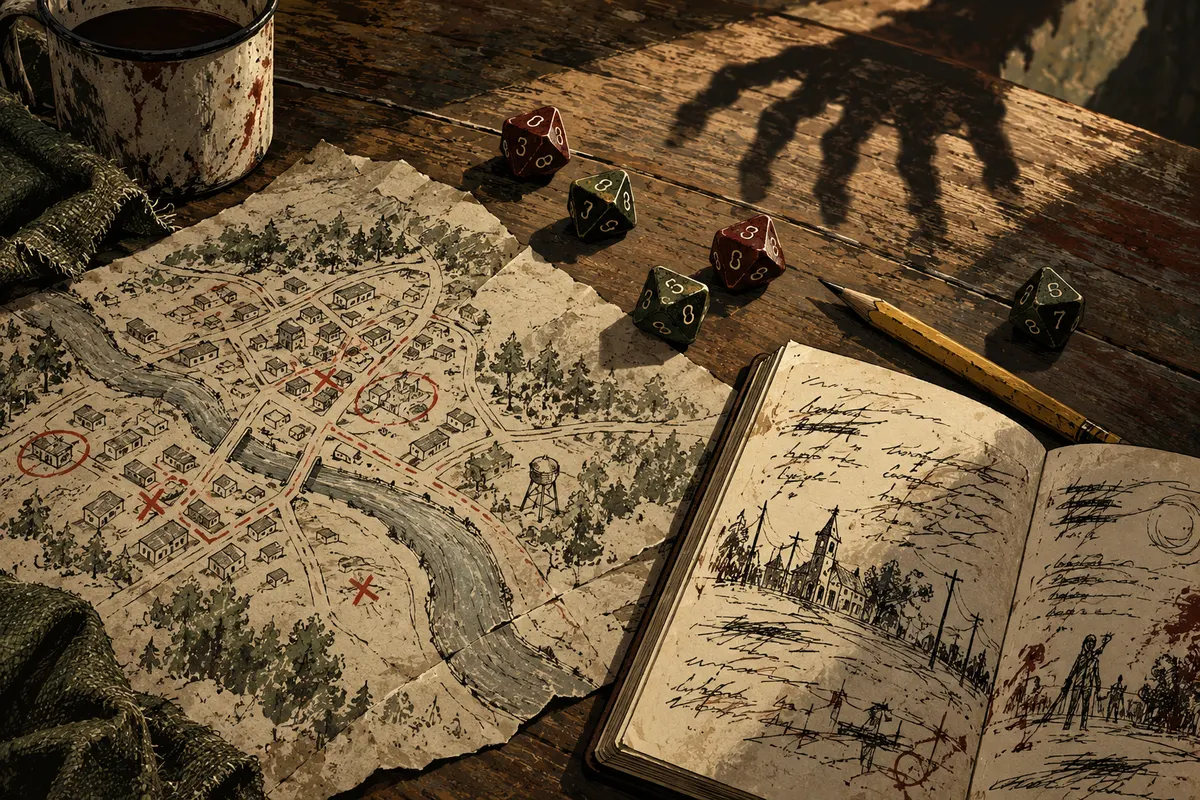
The door will not hold. You have food for two days, one working car, and a friend who wants to go back for their dog. What do you do? That is the kind of choice All Flesh Must Be Eaten is built to support. The dead are a threat, but the living give the story its teeth.
This roleplaying game from Eden Studios uses the Unisystem rules. It gives a group tools to tell zombie stories at a table. One person runs the world and its threats. The others play the people trying to live through it. There is no fixed board or script that settles each turn.
The best reason to buy All Flesh Must Be Eaten is control. You get to decide what the zombies are, why they rose, and what it takes to stop them. The trade-off is work. Someone must shape those choices into a night worth playing.
What kind of survival horror do you want?
Many zombie stories start in much the same way. The dead rise. The roads fill. Help does not come. What happens next is where the genre gets interesting.
Do the zombies move fast? Can they think? Does one bite end a life, or can the group find a cure? All Flesh Must Be Eaten treats those questions as things you can change. You do not have to use a single official world.
That freedom is useful for a group with a clear taste. One table might want bleak survival horror with no easy wins. Another might want a wild escape full of close calls. Neither needs to pretend that the same kind of zombie fits both stories.
Before you buy, ask who wants to run it. A keen host with a strong idea is a better sign than a pile of extra books. Rules can help settle a risky choice. They cannot make your friends care about a dull one.
What is in All Flesh Must Be Eaten Revised?
The publisher's overview puts survival, horror, and conflict at the heart of the game. The Revised core rulebook is a 256-page volume. It includes eleven Deadworld campaign settings, character creation, equipment, and tools for making zombies.
These campaign settings matter. You can start with a world that already has a cause for its undead and a set of threats. Or you can treat it as a starting point and change what does not fit. You are buying options, not a demand to follow a long official timeline.
| What you get | What your group brings |
|---|---|
| Character and equipment rules | People with goals worth caring about |
| Eleven Deadworld settings | A setting and tone everyone wants |
| Zombie creation tools | A threat that suits the story |
| Unisystem mechanics | A host ready to learn and make calls |
You do not need to buy a shelf of sourcebooks to begin. Start with the core book or the free kit. Add a supplement once a real gap comes up in play. Buying a book because it solves a problem is better than buying it because the spine looks good next to the others.
How the rules feel on paper
The basic task roll is easy to grasp. Roll a ten-sided die and add the relevant attribute and skill. A total of nine or more usually succeeds, with modifiers for the task. The rules also account for degrees of success and extreme rolls.
That simple core sits inside a more detailed game. Characters have skills, qualities, and drawbacks. Fights involve more than one flat roll to see who wins. You need to learn which numbers matter and when to use them.
The free Waking Dead starter is the best way to judge that fit. It has rules, ready-made characters, and an adventure. Read a few character sheets and the combat section. If those make you want to plan a game, the full book may be a good buy.
If the sheets make your eyes glaze over, listen to that feeling. All Flesh Must Be Eaten is not a tiny party game. Its detail can be a strength, but it is still detail you must use.
Characters are more than targets
All Flesh Must Be Eaten lets you make Norms, Survivors, and the Inspired. These types give the group different starting points. Agree on the sort of cast you want before everyone builds a character alone.
A survival story changes when the cast can solve every problem with force. It also changes when no one can do anything well. The useful middle ground is a group with clear strengths and gaps.
Consider a medic who can keep a friend alive but needs help to leave the scene. Or a driver who knows the back roads but has no reason to trust the others. Those are story hooks, not special builds or extra rules. You can use them to think about what each person adds.
Give each character a reason to stay with the group. “We all want to live” works for a start. A shared promise, a person to protect, or a place to reach can carry the story further.
The zombie tools are the main attraction
A group that knows every trick in a zombie film can be hard to scare. All Flesh Must Be Eaten gives the host a way to change what the walking dead can do. Familiar shapes can hide a new threat.
The point is not to make the strongest possible monster. It is to make choices matter. If noise draws the dead, a loud escape has a cost. If the group does not know how the zombies spread, helping a stranger can cause a real debate.
Keep some rules of the world clear. A threat that changes at random is hard to plan around. A threat with rules the group can learn gives players a reason to watch, test, and think.
This is where a flexible RPG earns its place. You can respond to what your friends do without forcing them back onto a fixed route. If that sounds like too much work, the set structure in our Arkham Horror and Eldritch Horror comparison may suit your game night better.
Where All Flesh Must Be Eaten asks more of you
The range can be a drawback. New hosts may spend more time choosing campaign settings than preparing the first scene. Pick one simple idea and run it for a night. You can widen the world once the group wants more.
Do not assume that a zombie on the page will be a threat at your table. In one player discussion of Unisystem difficulty, a host questioned how easy routine rolls felt for skilled characters. That is one table's report, not proof that the system is broken. It does show why a short trial game helps.
A good first session can expose the dull parts of your plan. If the cast wins every fight with ease, do not simply add more bodies. Think about what else is at stake: time, trust, food, or a route home. The aim is pressure, not a contest between the host and the players.
Agree on limits before play. Survival horror can touch on grief, harm, and loss of control. A quick talk about what belongs in the story lets everyone take part without guessing where the line is.
Which edition should you buy?
Look for the Revised core rulebook if you are starting fresh. Eden describes it as the same core content as earlier printings, with fixes and an added appendix for Open Game License conversions. That makes it an update, not a wholly new game.
If you already own an earlier copy, check what you need before paying again. New cover art alone may not be enough reason. If you are buying used, check the edition and condition, not just the title in the listing.
The old publisher page lists a $30 suggested price. Treat that as historical, not a promise of today's stock or checkout total. Used print copies and digital editions can have different prices. Compare the exact format before you order.
Is All Flesh Must Be Eaten worth it?
Yes, if your group wants a zombie RPG it can make its own. The core idea remains strong: decide what the dead are, then see what the living will do. Its campaign settings and monster tools give that idea room to grow.
It is a less clear buy if you want almost no prep, very light rules, or a story that runs itself. Try the starter before you commit. One good night will tell you more about the fit than a stack of praise.
For tone and story ideas away from the table, our gothic horror reading guide looks at fear built from place, secrets, and strained trust. The best survival horror needs more than a locked door. It needs a reason to care who is on each side.